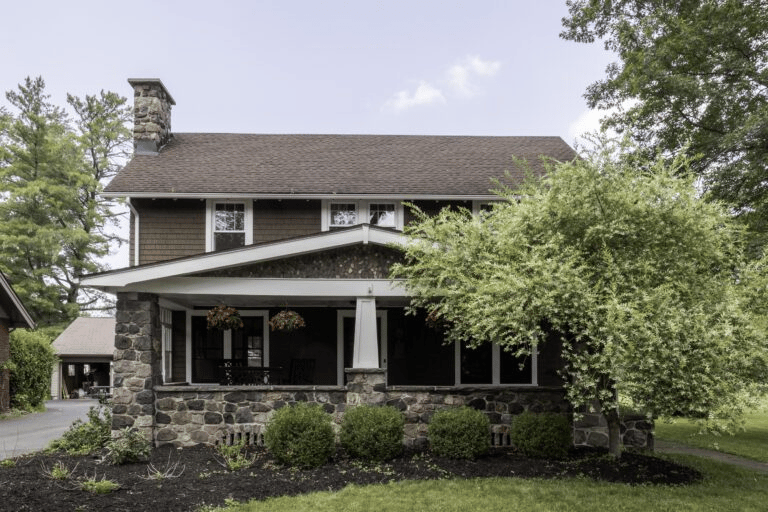
400 Girard Avenue, one of 64 homes listed within the Town of Aurora through October in 2023, was initially listed for $474,900. The property received multiple offers and it sold in three days for $535,000.
I’m often asked, what is the impact of high-interest rates on our local real estate market? The answer is that switching costs are high, and therefore inventory is low.
Before I expound, I’ll offer a bit of historical perspective. In October 1981, 30-year fixed-rate mortgages peaked at 18.63 percent. By the end of the decade, rates had retreated to around 10 percent. The 1980s were a very expensive time for borrowers.
To recall more recent history, in the year 2000, interest rates on a 30-year fixed mortgage hovered around 8 percent. Over 20 years later, we’ve approached that number again, so for most homeowners and buyers who are younger than baby boomers, these rates have been close to the highest rates in their adult lives.
Last week, a 30-year fixed-rate mortgage for someone with exceptional or very good credit was around 7 percent. This number has been retreating over the last few months but is still substantially higher than the 3.58 percent rate that was available just two years ago on Dec. 7, 2021.
So, what did I mean when I said that switching costs are high, and why does that deflate our inventory levels?
First, here is the basic data. Through October of this year, there were 64 single-family homes in Aurora listed by real estate agents in the Multiple Listing System. That compares with 103 single-family homes listed for the same period in 2022, representing a substantial drop of 37.9 percent of available homes for sale throughout the year.
The economics of supply and demand predict that with a lower supply of housing inventory, you’d expect housing prices to rise. This has been largely true, with the 2023 median sales price in the Town of Aurora up 5.3 percent from the prior year to $416,000.
It’s actually a great time to sell your house, but it does pose a problem. If you are like most of us, if you sell your house, you will need to find a new place to live. And unless you can purchase your new home with cash, buying your next house will require borrowing at the current interest rates, which will increase your living costs.
Most owners of single-family homes have their mortgages locked in at a rate closer to the 3.5 percent rate of two years ago, which is half of the current rate of 7 percent, or more. Even if your original loan rate was higher, many of us refinanced our mortgages to take advantage of the historically low-interest rates.
The real-life effect of current interest rates on home shoppers in our community is best shown in an example. Say that your home is worth the current median sale price of $416,000. You sell it and make a lateral move into a home that also costs $416,000.
If you put 20 percent down, you will need to mortgage $332,800. Mortgaging that amount at your old rate of 3.5 percent creates a monthly mortgage payment of $1,494. However, your new mortgage will be at 7 percent, creating a monthly mortgage payment of $2,214.
In this hypothetical scenario, your mortgage payment goes up 48 percent or $720 per month, for a home with the same market value.
As stated at the top, the switching costs are high.
In a typical housing market over the last twenty years, homeowners would sell their house once every seven years on average. Life circumstances are often the impetus; like death, divorce, job change, the birth of a child, an emptying nest or retirement. Today, because of the high switching costs, people are more likely to stay in place a little longer and benefit from the advantageous mortgage rate in their current home. As a result, available inventory levels in our small communities have come down. We can expect inventory levels to be constrained, but slowly climb, as mortgage rate pressure is gradually relieved.